
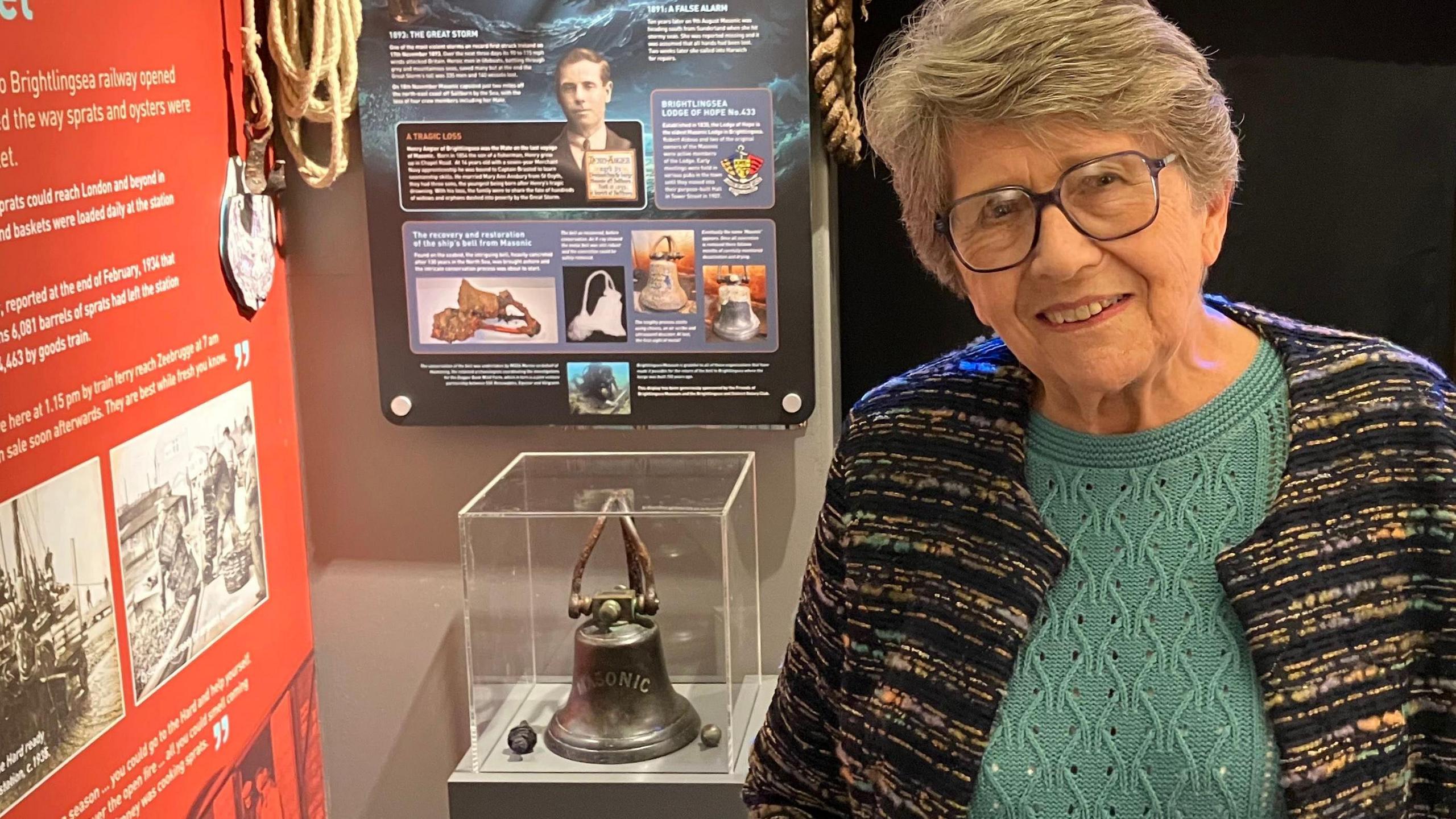
Text and images from Matt Knight, BBC Essex (https://www.bbc.co.uk/news/articles/cg7nznnj8nlo)
The Masonic sank off the North Yorkshire coast during a fierce storm in 1893, and the entire crew and the ship’s high-copper alloy bell were lost.
But it is now back in Brightlingsea, where the ship was built, after workers constructing the Dogger Bank Wind Farm found it in the North Sea.
Margaret Stone, curator of Brightlingsea Museum, which now houses the bell, said:
“It’s really special, the bell is a real tangible item that links today with our history.”
The Masonic, a barge which is believed to have carried coal, building materials and food, was built by local shipbuilder Robert Aldous and took its name from the masonic lodge which is still in the town today.
One of its owners was Captain William Dove, who died along with all hands when it sank during four days of severe storms in November 1893.
Captain Dove’s great, great-grandson Richard, still lives locally, but had no idea about The Masonic and its history until the ship’s bell was recovered. He said:
“It’s a real pleasure to think that something that was used by my great, great grandfather is here back in Brightlingsea, where it was first used. Hopefully, the fully restored bell is testament to those brave souls that sadly perished in 1893, and we are deeply grateful to everyone who has breathed new life into this wonderful piece of maritime history.”
Workers building the Dogger Bank Wind Farm, the world’s largest offshore wind farm, first thought the bell was an unexploded bomb when it was unearthed in 2022.
But after painstaking restoration work, it became clear it was a part of The Masonic, although the vessel itself has never been found.
Andrea Bailey, deputy receiver of wreck, who registers and traces artefacts found at sea, said:
“The fate of The Masonic and her crew was a tragedy far away from where it first set sail. So it feels right that the bell, the last surviving piece, is returned to where it was built.”
Carola Del Mese, conservator at MSDS Marine and Heritage, said it took around a year to restore the bell to its current state. She said:
“Conserving The Masonic’s bell has been a technical challenge and a privilege, and I’m honoured to have been part of its return journey home to Brightlingsea as a commemoration to the crew and an addition to local history.”
Discover more from Museums Essex
Subscribe to get the latest posts sent to your email.
 Museums Essex